
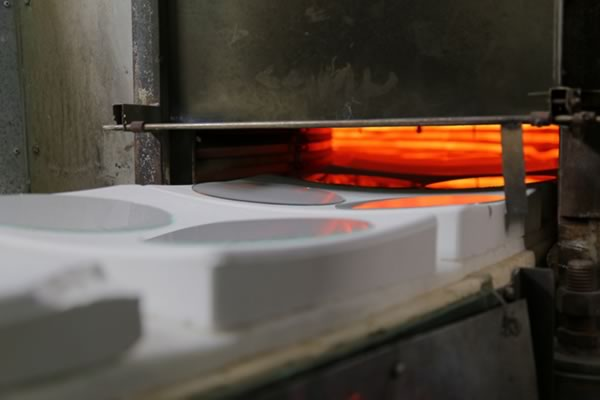
Stop Wasting Power on Your Glass Annealing
Let’s be honest: glass annealing is usually a total energy hog. Most traditional ovens just blast the entire chamber with heat, warming up a bunch of empty air while you wait for the glass to catch up. It’s wasteful, and it shows up on your power bill every single month. We do things differently. By using fast-response infrared lamps, we hit the glass directly. No more heating the whole room. Your heaters stay on for less time, and your overhead drops.
Why “Fast” Actually Matters
Old-school heating relies on convection. It’s slow. It’s like trying to warm up a house by opening the oven door. Our IR lamps use shortwave radiation. The moment they click on, the energy hits the glass surface and turns into heat. Right then. Right there. You can hit your annealing temperatures in seconds. Because you have so much more control over the heat, you get fewer internal stresses in the glass. That means less scrap in the bin and more finished product heading out the door.
Getting the Setup Right
You can’t just plug these in and hope for the best. You’ve got to look at your conveyor speed and how thick your glass is. If you’re moving thick slabs, you’ll need high-wattage tubes to get the heat density you need. Just keep an eye on your wiring—those tubes pull a lot of power. And if you’re running a high-voltage system, make sure your controllers can handle the rapid switching. You don’t want them burning out mid-shift.
The Real-World Stuff: Maintenance
Nobody wants their line down for four hours because a single tube popped. We designed these for quick swaps. The connectors are standardized, so you just drop a new one in and get back to work. But here’s a heads-up: the more heat you pump out, the harder your cooling fans have to work. If you’re pushing the lamps to the limit to speed up your line, double-check your ventilation. If that ambient heat doesn’t move away, you’re going to fry your sensors.
The Big Picture
When you move away from gas-fired or convection heaters and go with targeted IR, you stop paying to heat air. You only pay to heat the product. It’s a simple shift, but it cuts the kWh per unit significantly. Your wallet—and your energy meter—will notice the difference.