

Introduction
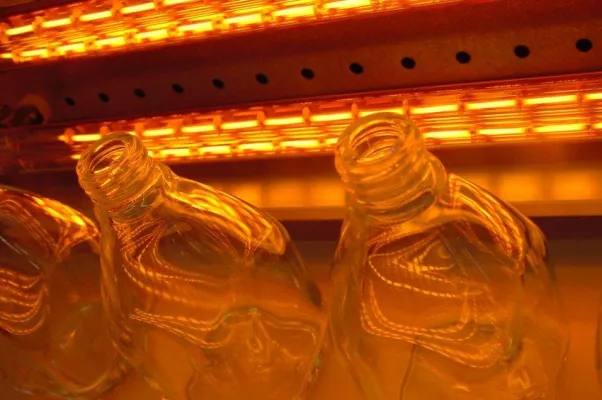
You know that moment on a glass coating line when you’re staring at the finish, hoping for that deep, flawless gloss… and instead, you’re seeing streaks and uneven patches? It’s frustrating. More often than not, the root of that problem is a thermal profile that just isn’t strong enough. We felt that pain, so we built the High-Gloss Glass Finish Dryer to solve it once and for all. It uses shortwave infrared halogen heating to create a perfectly even heat field. The result? Consistent curing every single time, and a surface that’s clean, smooth, and completely streak-free.
Let’s Get Into the Tech
At the heart of this dryer is the shortwave infrared halogen tube. It’s engineered to respond instantly and give you precise control. The physics are pretty elegant, really. The filament heats up fast, and the quartz envelope sends that energy directly to the glass. This means you can cut down on cycle time without ever losing stability in the process. We set the unit at 400V so it has the muscle for high-density heating without losing power along the line. It packs 2500W of output into a 300mm length, concentrating the power exactly where you need it. You get a massive amount of heat in a surprisingly small footprint. Perfect for tight spaces or when you’re retrofitting an existing line. But here’s the trade-off. That kind of power density creates a lot of localized heat, so your machine’s cooling and airflow have to be up to the task. If the air around the lamp gets too hot, the output becomes unstable. So, do yourself a favor and get your thermal management plan squared away before you even wire it up.
The Materials and the Design
We use a quartz halogen lamp with a reflective coating. This isn’t just for show—it shapes the beam and stops stray radiation. The coating keeps all the energy focused downward, which gives you much better temperature uniformity across the glass and gets rid of those annoying hot spots. That’s the secret to even curing and a finish free of streaks. And the connector? It’s the standard R7s. It’s tough, reliable, and makes the lamp a true drop-in replacement. It can handle the high temperatures at the ends, and gives you a solid connection, both mechanically and electrically. No messing around with custom terminals. Just line it up, seat it, and clamp it down. Easy.
What It’s Like to Use
On glass mirror coating lines, this dryer works right after deposition, when the film needs to solidify—fast and evenly. The uniform heat field stops those wavy lines and mottling that happen when drying is uneven. The payoff is huge: you get a higher first-pass yield and way less scrap. The fast-on response also means you can tweak the zones quickly when you switch coatings or change line speeds. For the engineers out there, this translates to less downtime and fewer headaches when switching between different products. If you need a dryer that can hold a tight thermal profile, spec the shortwave halogen unit, make sure your cooling is right, and get ready for a consistent, high-gloss finish. Run after run.