
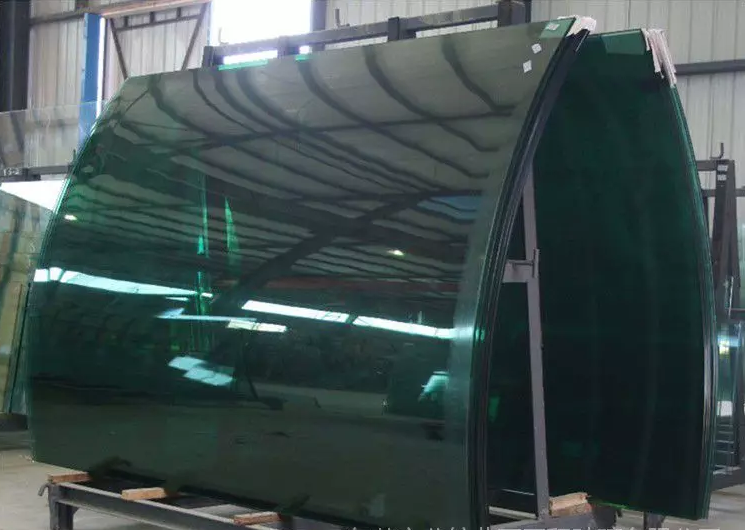
On the line, quartz rejects cost you in more than scrap. They cost you in downtime. When the thermal profile drifts, you start seeing uneven expansion, stress fractures, and annealing that misses the mark. The heating system has to deliver repeatable heat—fast—without chasing process variation. What matters, technically We build heat treatment for quartz around controlled, high-response heating that holds tight temperature uniformity across the load. Our quartz-halogen or NIR modules are set up for rapid ramp rates and stable dwell control, so the glass hits setpoint quickly and holds there without hot spots. Power density is matched to the work zone—enough to drive through the thermal mass, but not so much that you overshoot and create thermal stress. That gives you a thermal field you can trust, cycle after cycle, whether you’re running bending, annealing, or pre-processing for lamination. Why this works in practice Quartz punishes slow, inconsistent heating. Fast, uniform heat shortens cycle time and cuts scrap caused by thermal shock and warp. When heating is predictable, you can tighten tolerances on bend radius, keep viscosity consistent during forming, and keep the annealing curve repeatable. That means higher throughput, fewer reworks, and lower unit energy cost because the heat is applied on-demand—not wasted on warm-up or over-compensation. Here are the details that keep it running Installation is straightforward on standard fixtures, but quartz has low thermal expansion and can be sensitive to edge contact and localized heating. Match emitter spacing to part geometry, verify emissivity differences between bare and coated quartz, and make sure the control strategy can handle the fast response without overshoot. Plan for clean power and adequate cooling—stable electrical conditions and controlled heat dissipation keep the system in spec.