


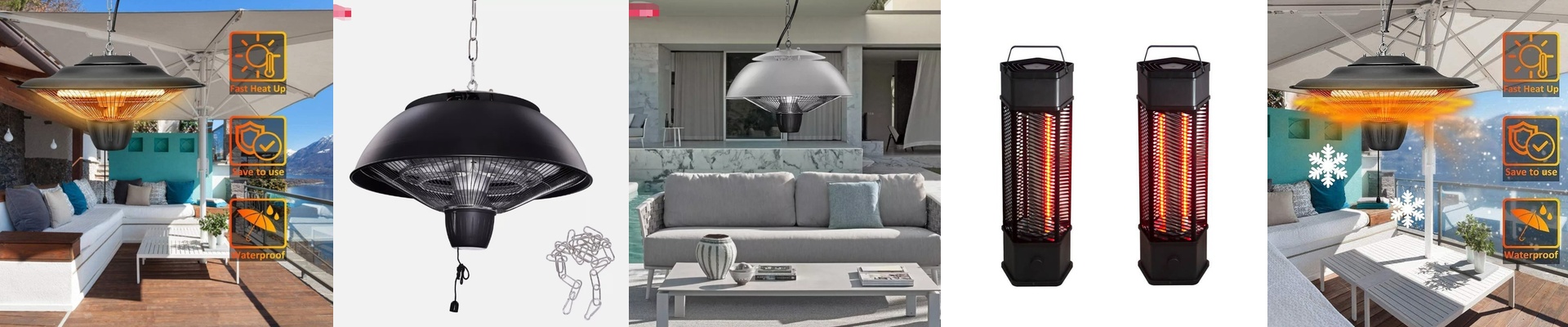

Stop Fighting Your Outdoor Heaters
Let’s be honest: outdoor heating is a battle. Between the salt air, the driving rain, and the constant temperature swings, nature is basically trying to kill your equipment from day one. Eventually, something gives. A tube burns out. It happens. But the real nightmare isn’t the broken part—it’s the bill for the labor and the headache of having a dead heater for two weeks while you wait for a specialist.
A Better Way to Fix Things
We got tired of seeing technicians tear apart an entire heater just to replace one piece. So, we built our IP65 heaters with a “drop-in” system. Instead of everything being hard-wired into a sealed box, the infrared modules just slide out. **It’s a total shift in how you handle repairs.**Your tech doesn’t have to spend the afternoon rewiring the unit on a ladder in the wind. They just pull the old module, slide in a new one, and they’re done. We’re talking about turning a four-hour ordeal into a fifteen-minute swap.
The Seal Struggle
Usually, when a company says “IP65 rated,” it means they’ve basically welded the thing shut. Great for keeping water out, but a total disaster when you actually need to get inside. We took a different route. We separated the heating zone from the electrical control box. The high-heat elements stay in their own shielded area, and the wiring stays tucked away, safe from the dust and rain.
The Trade-off
Now, look—nothing is perfect. A modular design means more connection points than a single, solid piece of welded metal. That means you have to be careful. If a gasket gets pinched during a swap, you’ve just invited water into the system. To help with that, we use high-grade silicone gaskets. They’re flexible enough to handle the constant expanding and shrinking that happens when these tubes heat up and cool down. They don’t crack after a few seasons, which means your heater stays dry even after you’ve swapped the tubes a couple of times.